


Page 26 - CIJ Sept 2025- Digital Edition
P. 26
COVER STORY


              “Technologies like IoT and AI are no longer
            optional — they are baseline requirements for
            global clients,” says Turbosu Mitra.
            Outlook: Hygiene as a
            Deciding Factor
              By 2030, hygiene and sustainability
            credentials are expected to be as critical as
            delivery speed and in some cases even more
            decisive. Regulatory mandates, investor
            expectations and consumer demands are driving
            logistics providers to embed hygiene and ESG
            metrics into operations. Strong performance
            in these areas can provide a competitive edge,
            even when operational speed is slightly lower.
              Technologies such as blockchain, IoT and
            digital twins will not only optimize speed
            but also automate sustainability tracking and
            ESG reporting, making hygiene a core part of
            strategic decision-making.

            Hygiene as a Strategic
            ESG Pillar

              At ARMSIPL, hygiene is not merely
            housekeeping — it is a strategic ESG pillar.
            Structured cleaning plans, staff training, eco-
            conscious practices and proper equipment
            management ensure that all warehouses, owned
            or leased, meet rigorous hygiene standards. Eco-
            friendly cleaning agents, energy-efficient tools
            and systematic waste segregation are standard
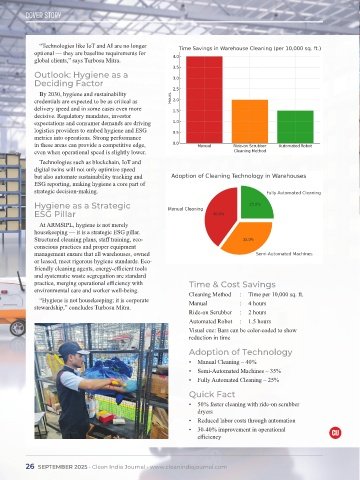
            practice, merging operational efficiency with      Time & Cost Savings
            environmental care and worker well-being.          Cleaning Method   :  Time per 10,000 sq. ft.
              “Hygiene is not housekeeping; it is corporate    Manual           :  4 hours
            stewardship,” concludes Turbosu Mitra.
                                                               Ride-on Scrubber   :  2 hours
                                                               Automated Robot   :  1.5 hours
                                                               Visual cue: Bars can be color-coded to show
                                                               reduction in time
                                                               Adoption of Technology

                                                               •  Manual Cleaning – 40%
                                                               •  Semi-Automated Machines – 35%
                                                               •  Fully Automated Cleaning – 25%
                                                               Quick Fact
                                                               •  50% faster cleaning with ride-on scrubber
                                                                  dryers
                                                               •  Reduced labor costs through automation
                                                               •  30-40% improvement in operational
                                                                  efficiency


          26  SEPTEMBER 2025 • Clean India Journal • www.cleanindiajournal.com

